Excavation and Soil Preparation: The Foundation of Success
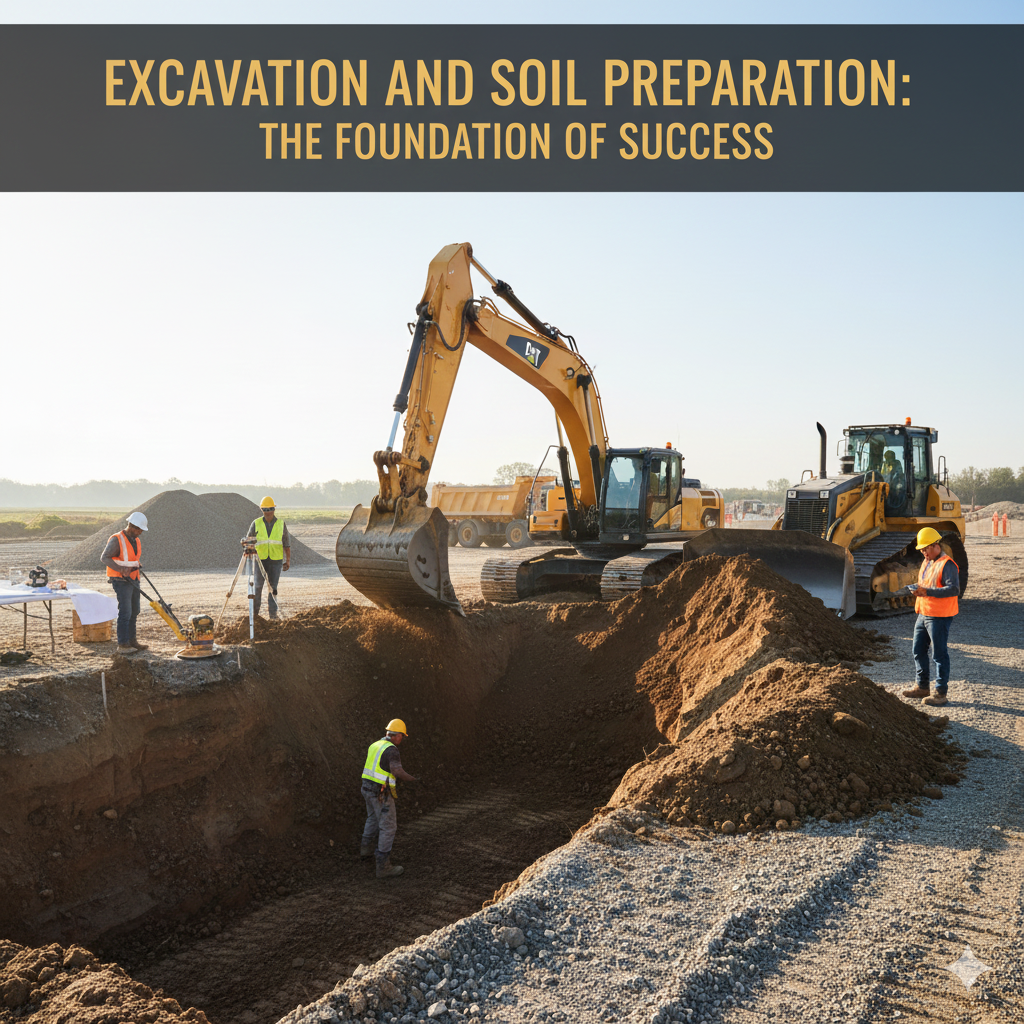
Excavation and soil preparation are critical for construction and landscaping projects, ensuring stability and longevity. These tasks require understanding soil behavior and creating a stable or fertile base for the project. Skipping them can lead to project failure.
Understanding Soil Types and Their Impact
Before a single shovel hits the ground, you must know what lies beneath. Soil is not a uniform substance; it varies wildly in composition, density, and moisture content. These characteristics dictate how you should excavate and prepare the site.
Clay
Clay is dense and retains water exceptionally well. While this can be good for certain agricultural uses, it poses significant challenges for construction. Wet clay expands, and dry clay shrinks. This constant movement can crack foundations and heave pavements. Excavating clay often requires heavy machinery, and preparation may involve amending the soil with lime or sand to improve stability and drainage.
Sand and Gravel
Sandy or gravelly soils drain well and are generally easier to compact than clay. They provide excellent support for foundations because they don’t expand or contract significantly with moisture changes. However, excavation in sandy soil can be dangerous because trench walls are prone to collapsing without proper shoring.
Silt
Silt is fine-grained and holds water like a sponge. It is notoriously unstable when wet, turning into a soup-like consistency that offers zero structural support. working with silt often requires extensive drainage planning and stabilization techniques before any building can occur.
Loam
Often called the gardener’s gold, loam is a balanced mix of sand, silt, and clay. It is ideal for landscaping projects because it holds nutrients and moisture while draining well. For construction, however, the organic matter in loam can be compressible, meaning it might need to be removed or compacted heavily to support structures.
Essential Excavation Techniques
Once the soil type is identified, the physical work begins. Excavation involves more than just removing earth; it requires precision to ensure the site is level, safe, and ready for the next phase.
Cut and Fill
This is one of the most common techniques used to level a site. It involves cutting (removing) soil from high areas and filling (placing) it in low areas. The key to successful cut and fill is compaction. The “fill” soil must be compacted in layers to ensure it doesn’t settle over time, which could cause the ground to sink.
Trenching
Trenching is typically used for laying utilities like water pipes, electrical conduits, or gas lines. It involves digging a deep, narrow channel. Because trenches are deep, they present safety risks. Shoring (using supports to prevent collapse) and sloping the walls are essential practices during this process.
Dredging
Used primarily in projects near water, dredging involves removing sediment and debris from the bottom of lakes, rivers, or harbors. This helps improve drainage or create channels for boats, but it can also be used to gather sediment for land reclamation projects.
Soil Preparation Methods for Different Projects
Excavation removes the unwanted earth, but preparation makes the remaining earth useful. The method depends entirely on the end goal.
Compaction
For foundations, driveways, and roads, the soil must be dense and non-shifting. Compaction involves using heavy rollers or vibrating plates to press soil particles together, removing air pockets. This increases the soil’s load-bearing capacity and prevents settling.
Grading
Grading is the process of shaping the land to direct water away from structures. Improper grading is a leading cause of wet basements and foundation damage. By creating a gentle slope away from the building, you ensure that rainwater flows harmlessly into drainage systems rather than pooling against the foundation.
Soil Stabilization
In areas with poor soil quality (like loose sand or wet clay), stabilization is necessary. This can involve chemical methods, such as mixing cement or lime into the soil to bind particles together. Alternatively, mechanical stabilization uses geosynthetics—grids or fabrics placed within the soil layers—to reinforce the ground and prevent movement.
Amending for Landscaping
If the goal is a garden or lawn, the focus shifts from hardness to health. This involves tilling the soil to aerate it and mixing in organic matter like compost or peat moss. This improves drainage, nutrient content, and root penetration for plants.
Tools and Equipment for Excavation
The days of relying solely on pickaxes and shovels are long gone. Modern excavation demands powerful equipment designed for speed and precision.
- Excavators: These heavy machines feature a bucket on a hydraulic arm and can rotate 360 degrees. They are the workhorses of the industry, capable of digging deep trenches and moving massive amounts of earth.
- Bulldozers: Equipped with a wide metal plate (blade) at the front, bulldozers are used to push large quantities of soil, sand, or rubble. They are essential for rough grading and clearing land.
- Backhoe Loaders: These versatile machines have a loader bucket on the front and a digging hoe on the back. They are perfect for smaller sites where a large excavator might be too bulky.
- Compactors: From handheld plate compactors to massive steam rollers, these tools are vital for finishing the soil preparation process.
Best Practices for Safety and Efficiency
Excavation is statistically one of the most hazardous construction activities. Collapsing trenches, hitting underground utility lines, and equipment accidents are real risks.
Call Before You Dig: Before breaking ground, it is imperative to contact local utility companies to mark underground lines. Striking a gas line or fiber optic cable can be dangerous and incredibly expensive.
Protective Systems: For any trench deeper than five feet, protective systems are mandatory. This includes sloping the ground away from the trench, shoring up the walls with supports, or using a trench shield to protect workers.
Erosion Control: disturbed soil is easily washed away by rain. Installing silt fences and maintaining vegetation cover where possible prevents soil erosion, which keeps the site stable and protects the local environment from sediment runoff.
The Role of Soil Prep in Project Longevity
You cannot build a castle on quicksand, and you cannot build a lasting home on poorly prepared soil. The longevity of any structure is directly tied to the quality of the ground beneath it.
Proper soil preparation prevents differential settling, where one part of a building sinks faster than another, causing cracks in walls and foundations. It ensures that driveways don’t buckle after the first winter freeze. In landscaping, it ensures that trees root deeply and lawns remain lush without excessive watering.
Furthermore, correct excavation allows for additions and renovations later. For example, homeowners looking into basement finishing services like those offered in Utah rely on the original excavation having been done correctly to ensure moisture control and structural integrity below grade. If the initial soil prep failed to account for drainage, finishing that space becomes significantly more difficult and expensive.
Conclusion
Excavation and soil preparation are crucial for long-term project success, requiring geological expertise, engineering precision, and strict safety measures. Proper techniques and soil understanding ensure stability, safety, and lasting functionality for builders and landscapers.